Menu
UX Case Study
UX Case Study
ParkIT - Automated Parking Solution App for Mega Cities
This app is developed to help users find, book, and pay for automated multi-story parking spaces, making urban parking more accessible and convenient.
This app is developed to help users find, book, and pay for automated multi-story parking spaces, making urban parking more accessible and convenient.
This app is developed to help users find, book, and pay for automated multi-story parking spaces, making urban parking more accessible and convenient.
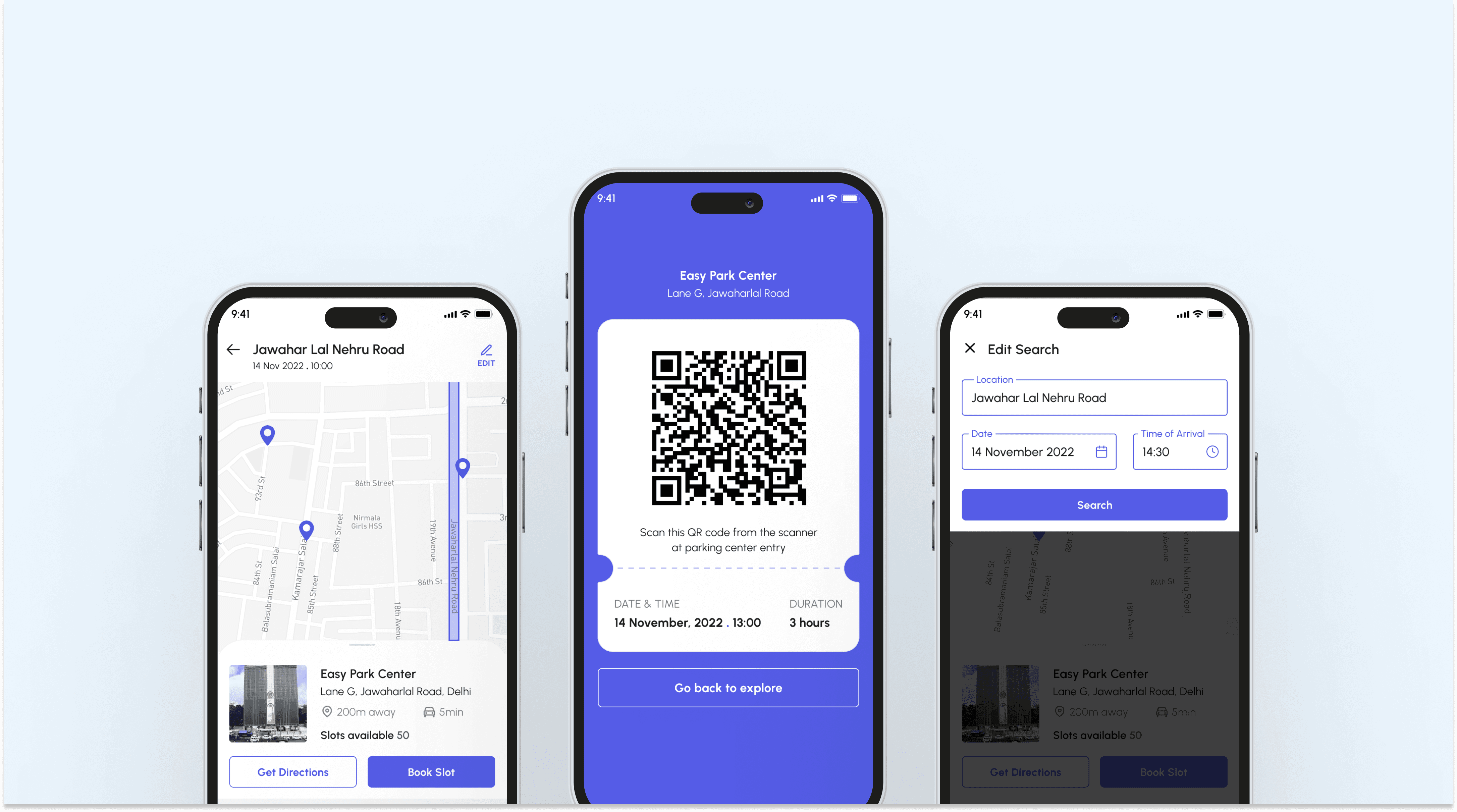
Project Overview
This app is developed to help users find, book, and pay for automated multi-story parking spaces, making urban parking more accessible and convenient.
Problem Statement
With the rapid growth of cities into mega cities, finding parking has become increasingly difficult. Our app offers a simple, automated solution that lets users easily book and pay for parking spaces hourly, helping to alleviate urban parking challenges.
My Role
I was responsible for the entire project, conducting research, ideation, prototyping, and UI design, handling every aspect of the app development on my own.
Tools
Figma, Figjam, Notion
Timeline
4 weeks
Secondary Research
I reviewed existing solutions, industry trends, and user feedback to understand the requirements for an automated parking system. Here are the key findings:
Cities worldwide are rapidly growing, creating more demand for parking and increasing congestion.
Many cities have fewer parking spaces than needed, especially during busy times, worsening traffic.
Apps and smart systems simplify booking and paying for parking, saving time and reducing search hassle.
Users prefer convenient, affordable parking solutions, often choosing mobile apps for real-time updates.
Local rules affect parking availability and costs, with some cities using pricing to manage traffic.
Parking congestion contributes to air pollution; better management can improve urban air quality.
Inefficient parking systems cost businesses and individuals money; effective solutions boost city revenue.
Cities need multiple automated parking centers featuring multi-story layouts with numerous parking spaces per floor, fully automated to eliminate the need for human intervention.
User Research
I conducted a series of calls with relatives and friends living in Tier 1 cities who use cars for their daily travel.
Objectives/Purpose of Research:
Validate assumptions about parking challenges.
Prioritize the needs of car users.
Identify additional pain points in the parking process.
Key Questions:
What factors do users consider when looking for a parking spot?
Where do users currently park their cars when visiting different places?
What is their overall parking experience like?
Have they ever pre-booked a parking spot?
Pain Points and Key Findings from Research:
No Parking Facility: Finding a secure spot without a dedicated parking area takes too long.
Empty Spots: It's hard to find available spots in parking areas.
Physical Tickets: There's a worry about losing physical parking tickets.
Locating Parked Cars: It's difficult to find parked cars when returning.
Disorganized Parking: Nearby cars are often parked poorly, causing issues.
Car Retrieval: The retrieval process can be long and frustrating.
User Personas
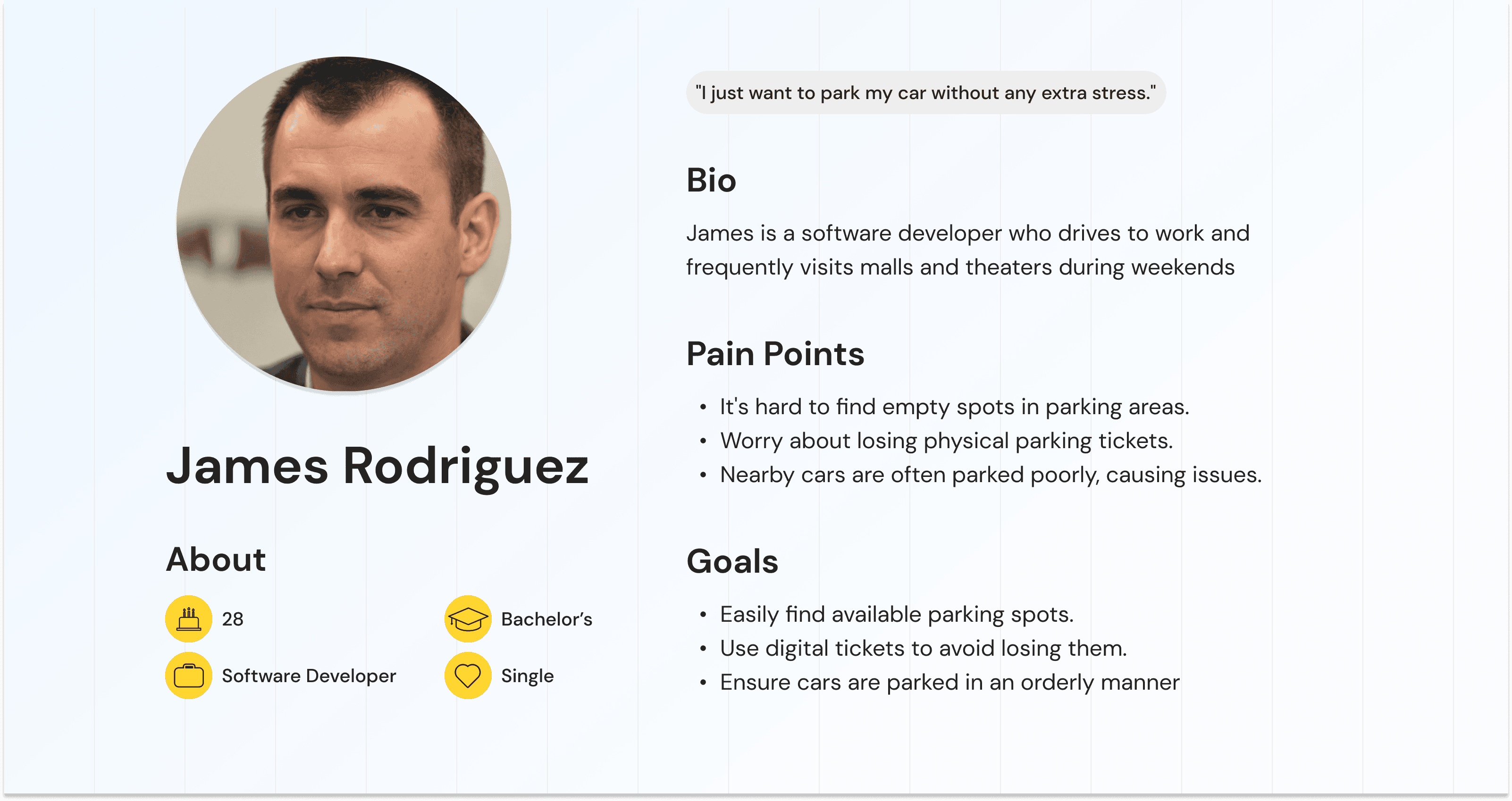
I created user personas by talking with potential users. This helps us design the app to meet their specific needs and fix common parking issues.
User Flow
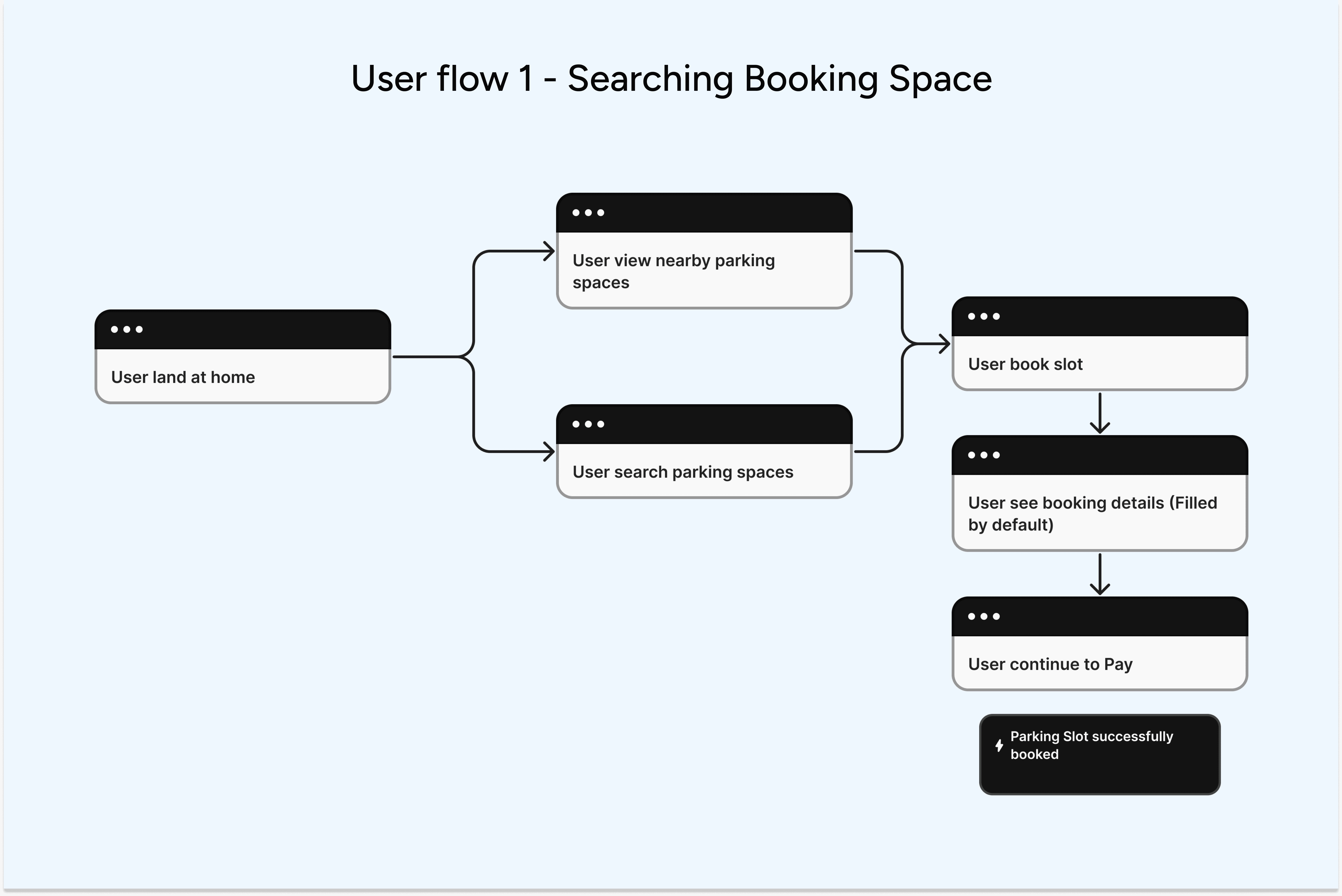
I created user flows by studying how people use parking apps. This helps make my app easy to use and effective for their parking needs.
Wireframing
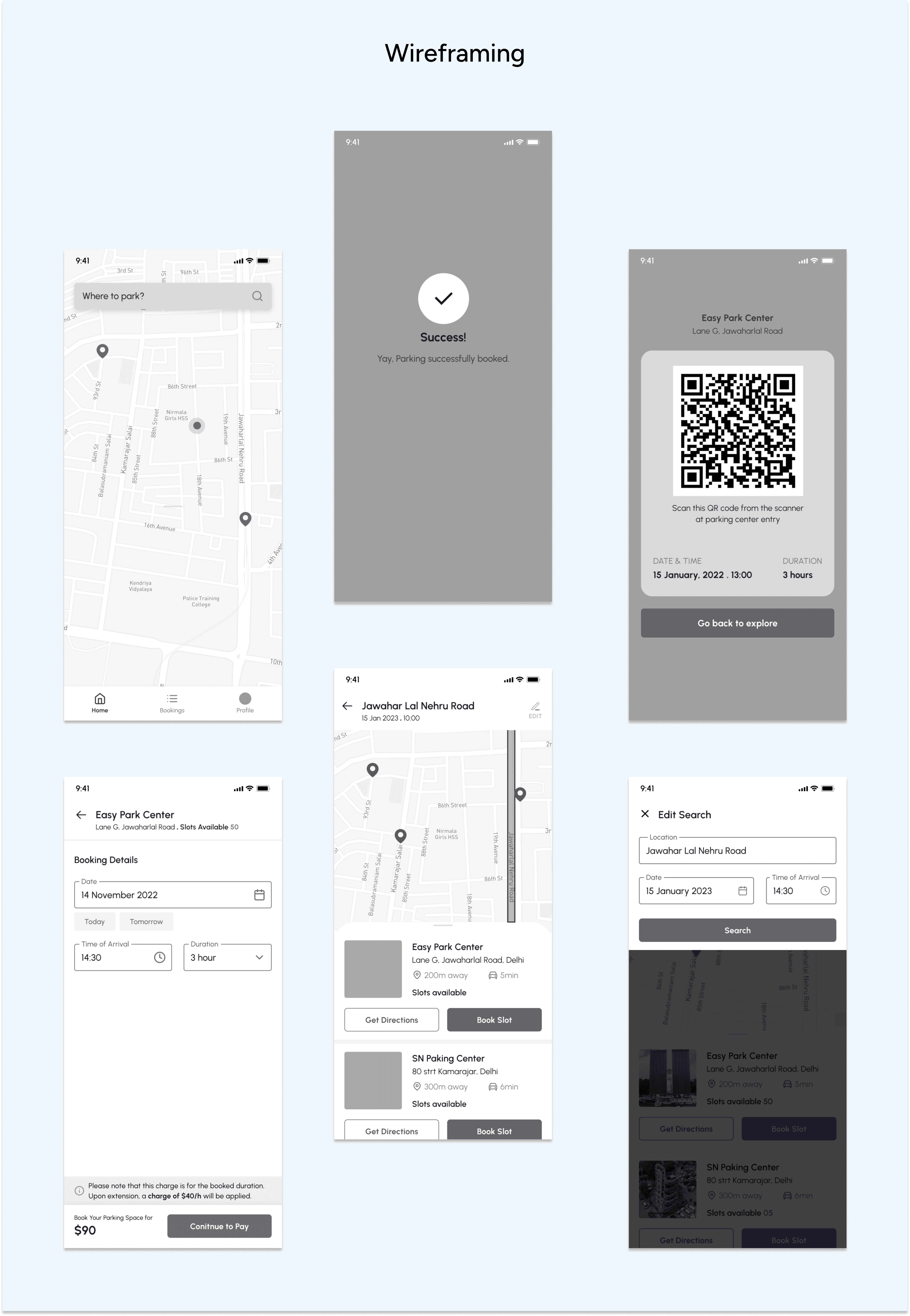
I mapped out how users navigate the app with simple sketches, ensuring everything is clear and easy to understand.
Visual Design
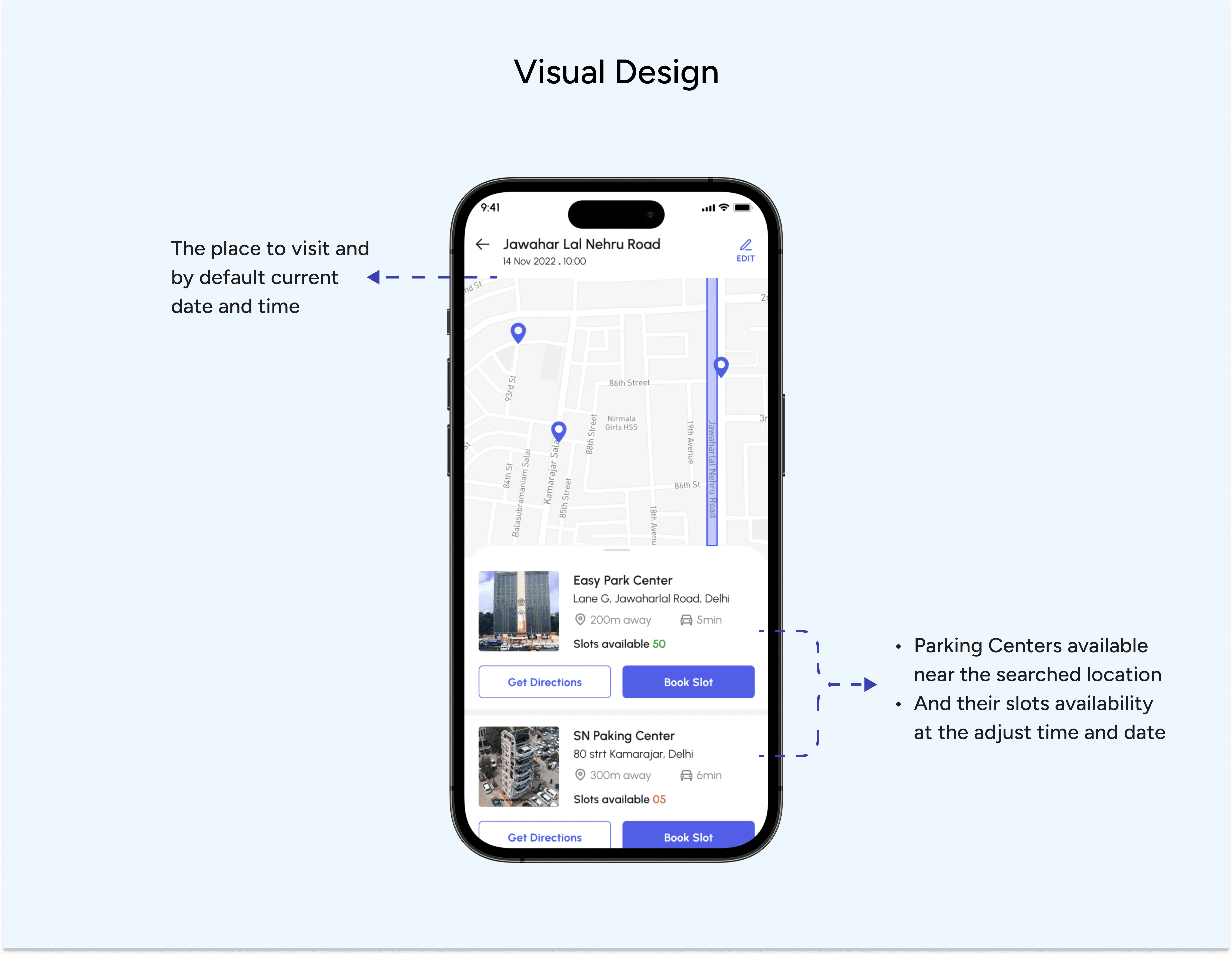
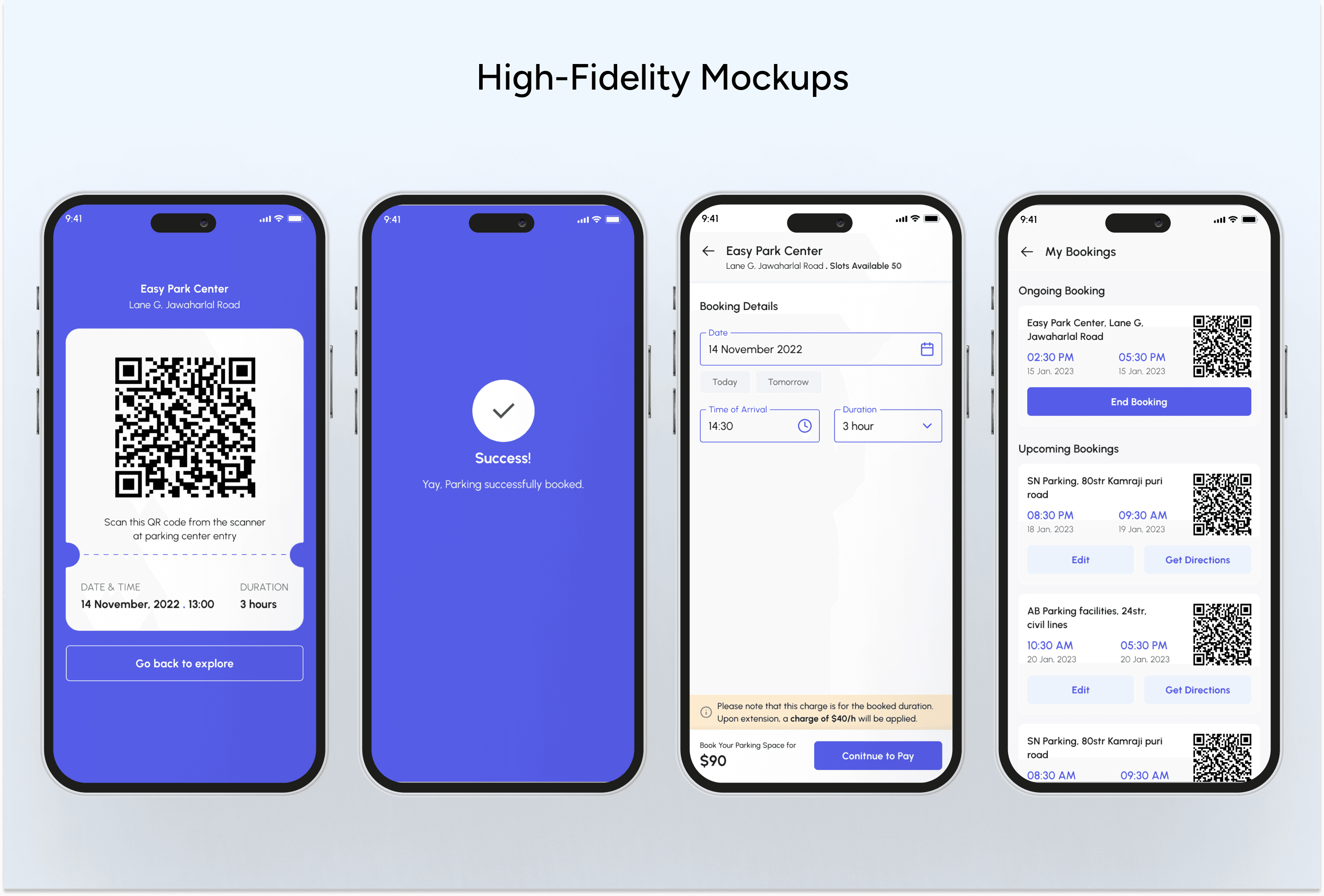
I then designed an intuitive and visually appealing interface that is easy to navigate, prioritizing user interaction and visual hierarchy.
Read the full case study by clicking below
Project Overview
This app is developed to help users find, book, and pay for automated multi-story parking spaces, making urban parking more accessible and convenient.
Problem Statement
With the rapid growth of cities into mega cities, finding parking has become increasingly difficult. Our app offers a simple, automated solution that lets users easily book and pay for parking spaces hourly, helping to alleviate urban parking challenges.
My Role
I was responsible for the entire project, conducting research, ideation, prototyping, and UI design, handling every aspect of the app development on my own.
Tools
Figma, Figjam, Notion
Timeline
4 weeks
Secondary Research
I reviewed existing solutions, industry trends, and user feedback to understand the requirements for an automated parking system. Here are the key findings:
Cities worldwide are rapidly growing, creating more demand for parking and increasing congestion.
Many cities have fewer parking spaces than needed, especially during busy times, worsening traffic.
Apps and smart systems simplify booking and paying for parking, saving time and reducing search hassle.
Users prefer convenient, affordable parking solutions, often choosing mobile apps for real-time updates.
Local rules affect parking availability and costs, with some cities using pricing to manage traffic.
Parking congestion contributes to air pollution; better management can improve urban air quality.
Inefficient parking systems cost businesses and individuals money; effective solutions boost city revenue.
Cities need multiple automated parking centers featuring multi-story layouts with numerous parking spaces per floor, fully automated to eliminate the need for human intervention.
User Research
I conducted a series of calls with relatives and friends living in Tier 1 cities who use cars for their daily travel.
Objectives/Purpose of Research:
Validate assumptions about parking challenges.
Prioritize the needs of car users.
Identify additional pain points in the parking process.
Key Questions:
What factors do users consider when looking for a parking spot?
Where do users currently park their cars when visiting different places?
What is their overall parking experience like?
Have they ever pre-booked a parking spot?
Pain Points and Key Findings from Research:
No Parking Facility: Finding a secure spot without a dedicated parking area takes too long.
Empty Spots: It's hard to find available spots in parking areas.
Physical Tickets: There's a worry about losing physical parking tickets.
Locating Parked Cars: It's difficult to find parked cars when returning.
Disorganized Parking: Nearby cars are often parked poorly, causing issues.
Car Retrieval: The retrieval process can be long and frustrating.
User Personas
I created user personas by talking with potential users. This helps us design the app to meet their specific needs and fix common parking issues.
User Flow
I created user flows by studying how people use parking apps. This helps make my app easy to use and effective for their parking needs.
Wireframing
I mapped out how users navigate the app with simple sketches, ensuring everything is clear and easy to understand.
Visual Design
I then designed an intuitive and visually appealing interface that is easy to navigate, prioritizing user interaction and visual hierarchy.
Read the full case study by clicking below
Project Overview
This app is developed to help users find, book, and pay for automated multi-story parking spaces, making urban parking more accessible and convenient.
Problem Statement
With the rapid growth of cities into mega cities, finding parking has become increasingly difficult. Our app offers a simple, automated solution that lets users easily book and pay for parking spaces hourly, helping to alleviate urban parking challenges.
My Role
I was responsible for the entire project, conducting research, ideation, prototyping, and UI design, handling every aspect of the app development on my own.
Tools
Figma, Figjam, Notion
Timeline
4 weeks
Secondary Research
I reviewed existing solutions, industry trends, and user feedback to understand the requirements for an automated parking system. Here are the key findings:
Cities worldwide are rapidly growing, creating more demand for parking and increasing congestion.
Many cities have fewer parking spaces than needed, especially during busy times, worsening traffic.
Apps and smart systems simplify booking and paying for parking, saving time and reducing search hassle.
Users prefer convenient, affordable parking solutions, often choosing mobile apps for real-time updates.
Local rules affect parking availability and costs, with some cities using pricing to manage traffic.
Parking congestion contributes to air pollution; better management can improve urban air quality.
Inefficient parking systems cost businesses and individuals money; effective solutions boost city revenue.
Cities need multiple automated parking centers featuring multi-story layouts with numerous parking spaces per floor, fully automated to eliminate the need for human intervention.
User Research
I conducted a series of calls with relatives and friends living in Tier 1 cities who use cars for their daily travel.
Objectives/Purpose of Research:
Validate assumptions about parking challenges.
Prioritize the needs of car users.
Identify additional pain points in the parking process.
Key Questions:
What factors do users consider when looking for a parking spot?
Where do users currently park their cars when visiting different places?
What is their overall parking experience like?
Have they ever pre-booked a parking spot?
Pain Points and Key Findings from Research:
No Parking Facility: Finding a secure spot without a dedicated parking area takes too long.
Empty Spots: It's hard to find available spots in parking areas.
Physical Tickets: There's a worry about losing physical parking tickets.
Locating Parked Cars: It's difficult to find parked cars when returning.
Disorganized Parking: Nearby cars are often parked poorly, causing issues.
Car Retrieval: The retrieval process can be long and frustrating.
User Personas
I created user personas by talking with potential users. This helps us design the app to meet their specific needs and fix common parking issues.
User Flow
I created user flows by studying how people use parking apps. This helps make my app easy to use and effective for their parking needs.
Wireframing
I mapped out how users navigate the app with simple sketches, ensuring everything is clear and easy to understand.
Visual Design
I then designed an intuitive and visually appealing interface that is easy to navigate, prioritizing user interaction and visual hierarchy.