Menu
UX Case Study
UX Case Study
Teleport Application - Designing for Better Healthcare Experience
I created an app that allows users to take complete care of their health and their families from home. Users can consult doctors online, book appointments, c...
I created an app that allows users to take complete care of their health and their families from home. Users can consult doctors online, book appointments, c...
I created an app that allows users to take complete care of their health and their families from home. Users can consult doctors online, book appointments, c...
Project Overview
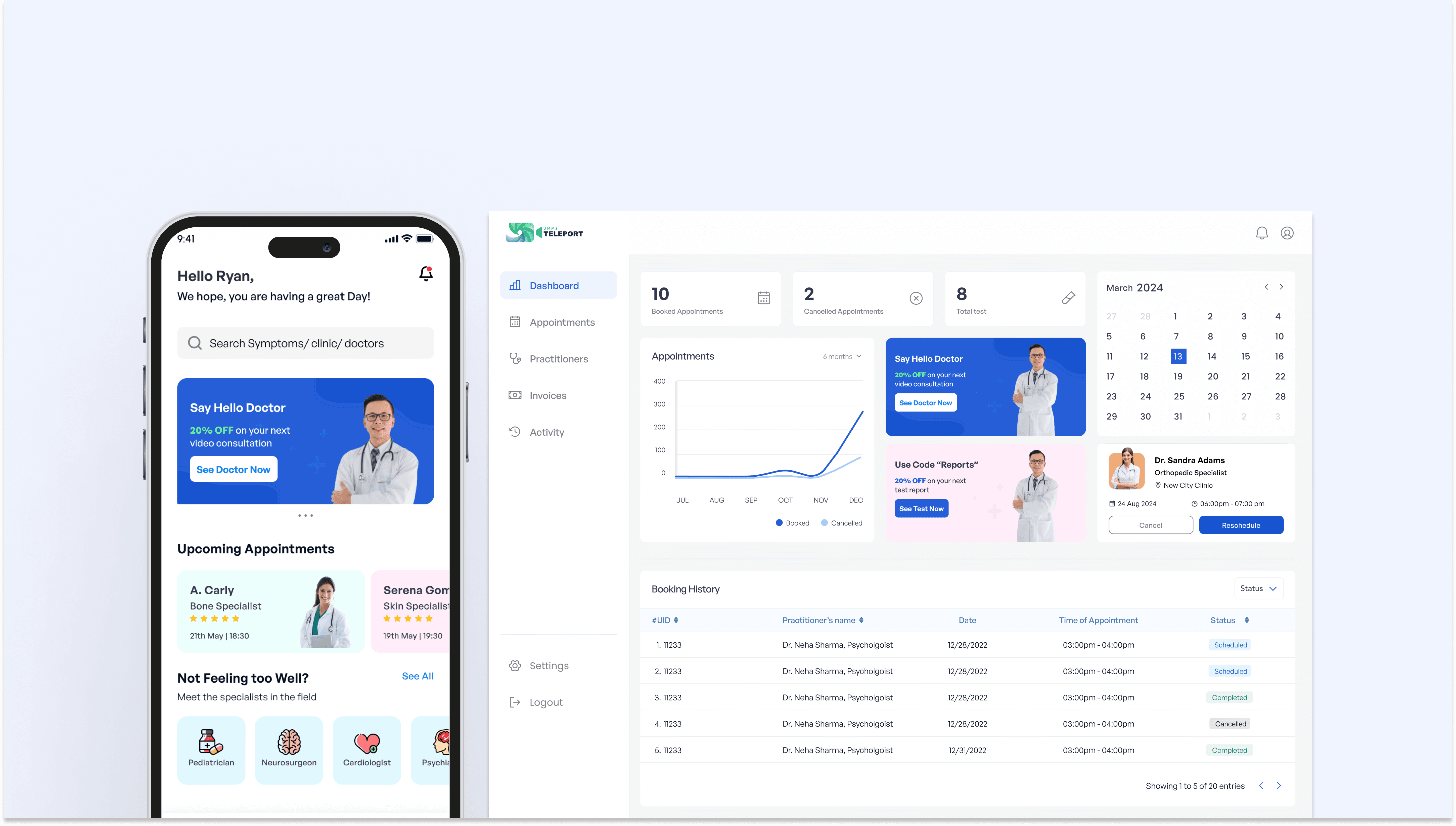
I created an app that allows users to take complete care of their health and their families from home. Users can consult doctors online, book appointments, conduct diagnostics, and receive prescriptions, all in one place.
Problem Statement
Users need a way to get trusted and affordable medical advice without visiting a doctor’s office. The current app is hard to use and can cause serious mistakes and bad outcomes.
My Role
As the solo designer, I was responsible for the entire design process, from user research to creating wireframes and prototypes. I worked on understanding user needs, ideating solutions, and crafting a seamless user experience.
Tools
Figma, Figjam, Notion
Duration
6 months
The Design Process
I adopted the design thinking process to understand user needs, ideate solutions, and create prototypes. Although testing was not completed, I focused on user research, ideation, and iterative design to ensure a user-centered approach.
Secondary Research
The telemedicine industry in the United States has grown a lot recently, especially during the COVID-19 pandemic. This growth is due to better technology, changing healthcare needs, and the impact of the pandemic.
Growth and Adoption
Telemedicine use increased a lot during the pandemic. In April 2020, 46% of Medicare primary care visits were through telehealth (McKinsey).
The CDC reported that telehealth visits rose from 1.6% of all visits in 2005-2006 to 8.2% in 2016-2017.
Technology and Infrastructure
High-speed internet, smartphones, and video call technology have helped telemedicine grow (National Telehealth Technology Assessment Resource Center).
Electronic health records (EHRs) make it easy to share patient information between doctors (HealthIT.gov).
Use Cases and Specialties
Telemedicine is used in many areas like primary care, mental health, skincare, and managing chronic diseases (American Telemedicine Association).
Studies show good results for telemedicine in stroke care, remote monitoring of chronic conditions, and improving access in rural areas (American Heart Association).
User Experience and Patient Satisfaction
A good user experience is important for telemedicine. Clear communication, easy appointment scheduling, and data security are key to patient satisfaction (Journal of Medical Internet Research).
Read the full case study by clicking below
Project Overview
I created an app that allows users to take complete care of their health and their families from home. Users can consult doctors online, book appointments, conduct diagnostics, and receive prescriptions, all in one place.
Problem Statement
Users need a way to get trusted and affordable medical advice without visiting a doctor’s office. The current app is hard to use and can cause serious mistakes and bad outcomes.
My Role
As the solo designer, I was responsible for the entire design process, from user research to creating wireframes and prototypes. I worked on understanding user needs, ideating solutions, and crafting a seamless user experience.
Tools
Figma, Figjam, Notion
Duration
6 months
The Design Process
I adopted the design thinking process to understand user needs, ideate solutions, and create prototypes. Although testing was not completed, I focused on user research, ideation, and iterative design to ensure a user-centered approach.
Secondary Research
The telemedicine industry in the United States has grown a lot recently, especially during the COVID-19 pandemic. This growth is due to better technology, changing healthcare needs, and the impact of the pandemic.
Growth and Adoption
Telemedicine use increased a lot during the pandemic. In April 2020, 46% of Medicare primary care visits were through telehealth (McKinsey).
The CDC reported that telehealth visits rose from 1.6% of all visits in 2005-2006 to 8.2% in 2016-2017.
Technology and Infrastructure
High-speed internet, smartphones, and video call technology have helped telemedicine grow (National Telehealth Technology Assessment Resource Center).
Electronic health records (EHRs) make it easy to share patient information between doctors (HealthIT.gov).
Use Cases and Specialties
Telemedicine is used in many areas like primary care, mental health, skincare, and managing chronic diseases (American Telemedicine Association).
Studies show good results for telemedicine in stroke care, remote monitoring of chronic conditions, and improving access in rural areas (American Heart Association).
User Experience and Patient Satisfaction
A good user experience is important for telemedicine. Clear communication, easy appointment scheduling, and data security are key to patient satisfaction (Journal of Medical Internet Research).
Read the full case study by clicking below
Project Overview
I created an app that allows users to take complete care of their health and their families from home. Users can consult doctors online, book appointments, conduct diagnostics, and receive prescriptions, all in one place.
Problem Statement
Users need a way to get trusted and affordable medical advice without visiting a doctor’s office. The current app is hard to use and can cause serious mistakes and bad outcomes.
My Role
As the solo designer, I was responsible for the entire design process, from user research to creating wireframes and prototypes. I worked on understanding user needs, ideating solutions, and crafting a seamless user experience.
Tools
Figma, Figjam, Notion
Duration
6 months
The Design Process
I adopted the design thinking process to understand user needs, ideate solutions, and create prototypes. Although testing was not completed, I focused on user research, ideation, and iterative design to ensure a user-centered approach.
Secondary Research
The telemedicine industry in the United States has grown a lot recently, especially during the COVID-19 pandemic. This growth is due to better technology, changing healthcare needs, and the impact of the pandemic.
Growth and Adoption
Telemedicine use increased a lot during the pandemic. In April 2020, 46% of Medicare primary care visits were through telehealth (McKinsey).
The CDC reported that telehealth visits rose from 1.6% of all visits in 2005-2006 to 8.2% in 2016-2017.
Technology and Infrastructure
High-speed internet, smartphones, and video call technology have helped telemedicine grow (National Telehealth Technology Assessment Resource Center).
Electronic health records (EHRs) make it easy to share patient information between doctors (HealthIT.gov).
Use Cases and Specialties
Telemedicine is used in many areas like primary care, mental health, skincare, and managing chronic diseases (American Telemedicine Association).
Studies show good results for telemedicine in stroke care, remote monitoring of chronic conditions, and improving access in rural areas (American Heart Association).
User Experience and Patient Satisfaction
A good user experience is important for telemedicine. Clear communication, easy appointment scheduling, and data security are key to patient satisfaction (Journal of Medical Internet Research).